


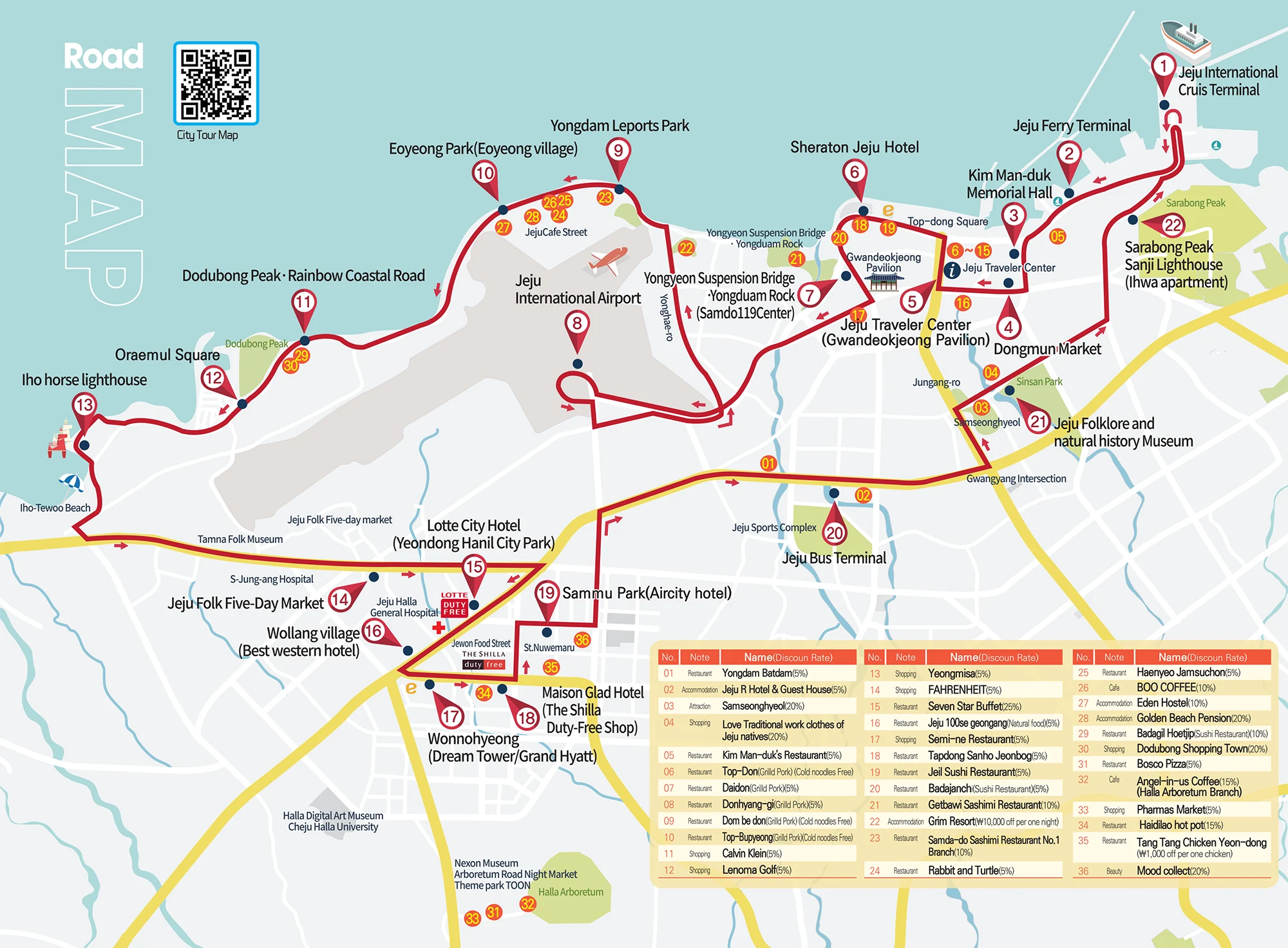
 Jeju International Cruise Terminal
Jeju Island is the center of cruise tourism in Northeast Asia, and many cruise tourists from China, Japan, Southeast Asia, and Europe have been visiting Jeju.
Jeju Ferry TerminalJeju ferry terminal is a place where ferries connecting various ports on the southern coast operates, and many tourists use it.
Attraction : The Industrial Alcohol Factory Concentration Camp : A 4.3 History Museum
Kim Man-duk Memorial Hall · Kim Mank-Duck Inn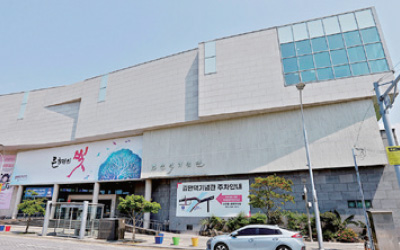
The Kim Man-duk Memorial hall is a place to voluntarily practice sharing and giving, as well as pay tribute to and emulate her life and spread a sprit that has become the symbol of representative righteous people in our country.
09:00~18:00 (Closed on Mondays)
Food : Black Pork Street, Seobudu Raw Fish Restaurant Street
Dongmun Market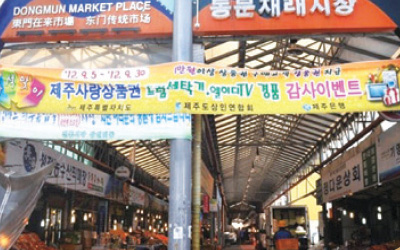
It is Jeju's largest permanent traditional market with the longest history located in the original downtown of Jeju Island. Seasonal Jeju specialties can be purchased at reasonable prices.
Dongmun Traditional Market : 08:00~21:00 / Night Market : 18:00~23:00
Attractions : Sanjicheon, Jeju Holy Land, Dumengi Alley
Shopping : Jungang-ro Underground Shopping Center, Chilseong-ro Shopping Street
Jeju Traveler Center · Gwandeokjeong Pavilion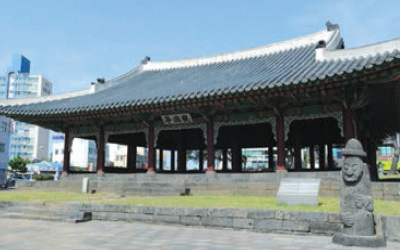
Jeju Traveler Center is a comprehensive tourist information and convenience facility for both domestic and international visitors and local residents. It offers traveler discount coupons and Jeju travel information services. Visitors can also enjoy various amenities, including automated currency exchange and tax refund services, as well as a shop featuring locally made Jeju products.
Gwandeokjeong Pavilion which is the treasure No. 322, was used as a training ground for soldiers during the Joseon Dynasty and is the oldest existing building in Jeju.
Attraction : Top-dong Square
Sheraton Jeju Hotel Attractions : Donghandugi(Sunset Spot), Jeju Beach Concert Hall
Shopping : E-Mart
Yongyeon Suspension Bridge · Yongduam Rock (Samdo119Center)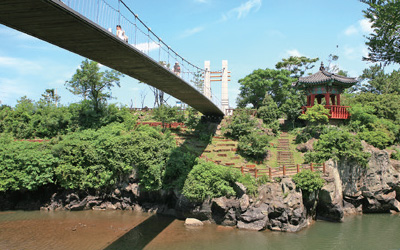
It is famous for its beautiful night view, which is evaluated as one of the representative night walks in Jeju Island. The splendid five-colored lights of the bridge spanning Yongyeon and the lights embroidering the cliffs along both sides of Yongyeon harmonize together to create a fantastic scenery.
Jeju International Airport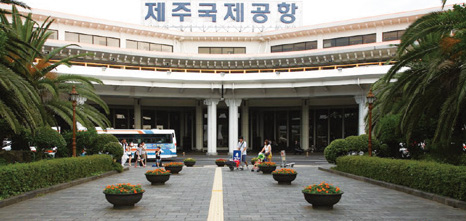
As the gateway to Jeju, which is responsible for the start and end of Jeju travel and international flights are operated daily. It is convenient to travel through express routes connecting Seogwipo and Jeju's eastern and western regions.
Bus stop : 1st floor, Bus Stop 3
Yongdam Leports Park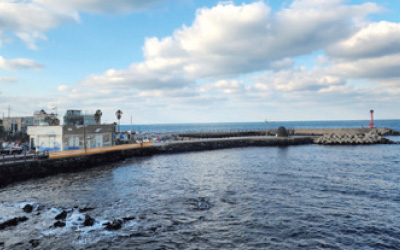
Yongdam Leports Park is a park created for healthy leisure, sports, and leisure activities of Jeju citizens. It is well equipped with convenient facilities such as a multi-purpose playground for various activities, foot volleyball court, volleyball court, roller skating rink, basketball court, and water supply facilities.
Eoyeong Park(Eoyeong village)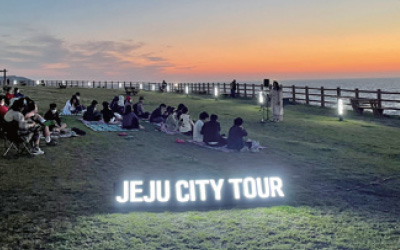
The east-west length of the park is about 400m. There is a children's playground, night lighting facilities, and benches. On the coast, there is a wave shovel made of basalt and the blue sea. Across the park are cafes and restaurants. This park is located in the middle of Jeju Olle Course 17 and is a popular place for olleh runners.
Dodubong Peak · Rainbow Coastal Road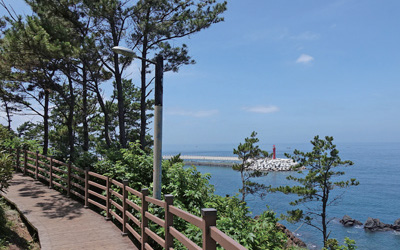
It is one of the '31 hidden unexplored places in Jeju City' announced by Jeju City by selecting 31 representative places around tourist attractions. It is easy to climb because the slope is slow, and the scenery from the road and the summit is quite spectacular with the view of the sea.
Attraction : Dodubong Peak Observatory
Oraemul SquareLocated near the coast of Dodu-dong in Jeju City, this cultural and recreational space is a square built around Oraemul, one of Jeju's representative natural spring waters (Yongcheonsu). During the summer, a swimming pool and foot-bathing experience area using the natural spring water are operated around Oraemul, making it a popular summer retreat for many visitors.
Iho horse lighthouse · Iho-Tewoo Beach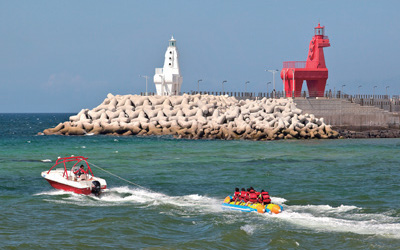
It passes through Olle Trail 17 and has Iho Tewoo Beach, which is the closest to Jeju city as well as Jeju International Airport. The beach is a good place for children to play because the slope of the white sand is slow and the waves are not strong. At night, the 'Twin Horse Lighthouse' is lit up to make the night more beautiful than the day.
Attraction : Chueok-ae Street
Jeju Folk Five-Day Market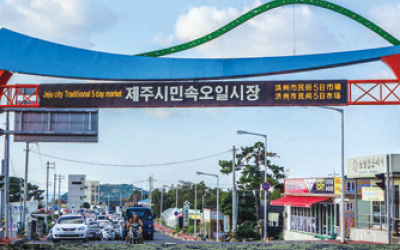
Jeju Folk 5-Day Market has the oldest tradition among traditional markets in Jeju Island and is a traditional space that has preserved the life and history of Jeju people. It is open on the 2nd, 7th, 12th, 17th, 22nd, and 27th of every month.
Lotte City Hotel · Lotte Duty-Free Shop (Yeondong Hanil City Park)Location : 2335-4, Yeon-dong, Jeju-si
Wollang village (Best Western Hotel)Location : 27, Doryeong-ro, Jeju-si
Wonnohyeong (Dream Tower / Grand Hyatt)It is a favorite place for tourists to stay because it has good accessibility to business hotels, movie theaters, hospitals, and large marts located around Nohyeong Five-way Street. In addition, there is a neighborhood park nearby that is good for walking, so many people are looking for it.
Shopping : E-mart, Lotte Mart
Maison Glad Hotel (The Shilla Duty-Free Shop) Food : Jewon Food Street
Location : 70, Noyeon-ro, Jeju-si
Sammu Park(Aircity hotel)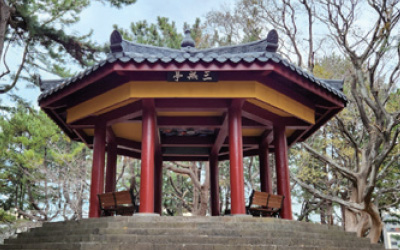
Sammu Park is a park built on Baeduri Oreum with a height of 85m. It is a park where Yeondong residents enjoy walking and exercising. This is a place where travelers visit because of the beautiful cherry blossoms in spring.
Shopping street : St.Nuwemaru
Jeju Bus TerminalYou can use the bus that connects the entire Jeju Island, such as Seogwipo, Seongsan, Hallim, and Gosan, as well as cross-roads, circuit roads, and mid-mountain roads.
Jeju Folklore and natural history Museum · Samseonghyeol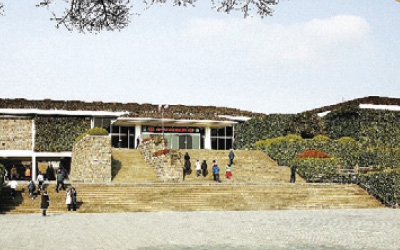
This is a museum where you can get in touch with the old living grounds and various cultures of Jeju. Exhibits related to Jeju's unique natural history are reproduced.
09:00~18:00 (Closed on Mondays)
+82-64-710-7708
2,000KRW for adult / 1,000KRW for adolescent
Attractions : Sinsan Park, Jeonnong-ro, Jeju unification hall
Sarabong Peak · Sanji Lighthouse (Ihwa apartment)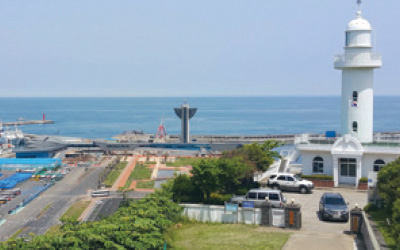
The sight of the red sunset seen from Sarabong coloring the whole sea is called 'Sabong Nakjo', and it is one of the 'Ten Views of Yeongju' with outstanding scenery in Jeju. Sanji Lighthouse is one of the most beautiful lighthouses in Korea.
Attractions : Byeoldobong, Chilmeoridang Yeongdeunggut site